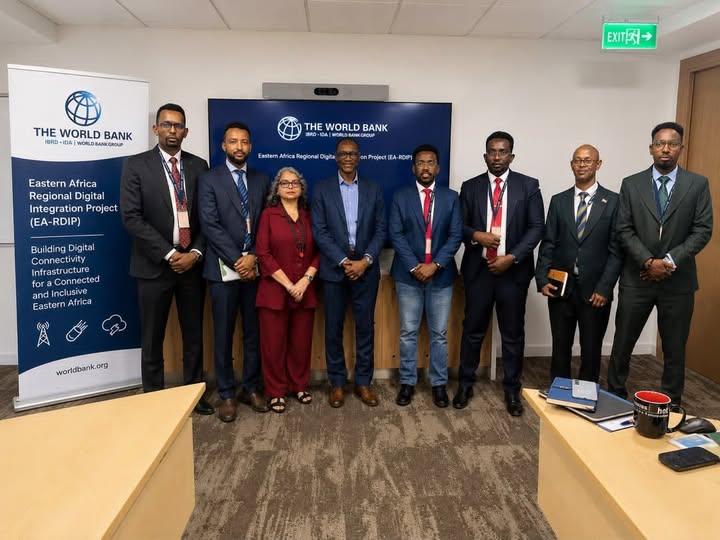
Somaliland officially launched its National Digital Transformation Strategy (2026–2030), a transformative 5-year roadmap developed with support from EA-RDIP and the World Bank.
In a landmark event held in Hargeisa, the Government of Somaliland officially launched the National Digital Transformation Strategy (2026–2030). The comprehensive policy framework was developed by the Ministry of ICT in close collaboration with the EA-RDIP project team and World Bank technical advisors.
The strategy outlines an ambitious roadmap to transform Somaliland into a knowledge-based, digitally empowered society over the next five years.
The Strategy is anchored on five strategic pillars:
1. Universal Digital Infrastructure: Ensuring widespread, affordable, and climate-resilient broadband access across all regions.
2. Digital Public Infrastructure & Services: Transitioning core administrative processes to digital e-government platforms, reducing transaction times for citizens and businesses.
3. Digital Financial Services & E-Commerce: Harmonizing cross-border digital payment systems, electronic transactions, and consumer protection protocols.
4. Cybersecurity & Data Protection: Developing comprehensive cybersecurity legislation, critical information infrastructure safeguards, and data privacy rights.
5. Digital Skills & Human Capital: Equipping 50,000+ youth, students, and public sector workers with market-relevant digital competencies.
The launch event was attended by government dignitaries, private sector executives, development partners, and civil society representatives.
The strategy outlines an ambitious roadmap to transform Somaliland into a knowledge-based, digitally empowered society over the next five years.
The Strategy is anchored on five strategic pillars:
1. Universal Digital Infrastructure: Ensuring widespread, affordable, and climate-resilient broadband access across all regions.
2. Digital Public Infrastructure & Services: Transitioning core administrative processes to digital e-government platforms, reducing transaction times for citizens and businesses.
3. Digital Financial Services & E-Commerce: Harmonizing cross-border digital payment systems, electronic transactions, and consumer protection protocols.
4. Cybersecurity & Data Protection: Developing comprehensive cybersecurity legislation, critical information infrastructure safeguards, and data privacy rights.
5. Digital Skills & Human Capital: Equipping 50,000+ youth, students, and public sector workers with market-relevant digital competencies.
The launch event was attended by government dignitaries, private sector executives, development partners, and civil society representatives.
Original Press Release & Updates
View the official publication source